Walk into any busy medical aesthetic clinic and you will hear a familiar question at the front desk: Can PDO threads help with this? The person might lift a cheek, point to the jawline, or pull gently at the neck. Polydioxanone, the same suture material surgeons have used safely for decades, has earned a new role as a discreet way to lift, firm, and refine facial contours without surgery. The immediate mechanical lift is what usually gets attention. What keeps patients coming back, and what changes the skin for the better over time, has more to do with biology than with barbs or vectors.
I have placed thousands of threads across faces and necks, and a consistent pattern emerges when you watch results over six to twelve months. The sharp, early lift softens into a more natural shape, and the skin itself looks better. Pores do not vanish, and deep creases do not dissolve, but the canvas tightens in a way that fillers alone rarely achieve. This article digs into those deeper benefits, how PDO thread therapy fits into a broader plan, the real trade-offs to consider, and what to expect from the first consultation through the recovery window.
What PDO threads actually do inside the skin
PDO threads are absorbable sutures, placed under the skin through a fine cannula or needle. There are three broad categories in daily practice. Smooth threads act like scaffolding and excel at skin rejuvenation. Twisted or screw threads provide a bit more volume support in shallow depressions. Barbed or cog threads lock into tissue and can create a visible lift along the jawline, midface, or brow. Manufacturers vary in barb design and thickness, and that matters for grip and longevity, but the biology underneath is similar: the body treats the thread as a temporary structure, then builds collagen around it as it dissolves.
The polysaccharide backbone degrades over roughly 6 to 9 months for many devices, with some thicker threads persisting closer to a year. During that time, mild controlled trauma from the thread insertion and the presence of the suture drive a localized wound healing response. Fibroblasts lay down new collagen (mostly type I and III), and we see incremental elastin remodeling as well. That collagen stimulation is the quiet win. Even after the thread has fully resorbed, the neocollagenesis can continue to improve texture and firmness for months.
Think of the lift as the scaffolding you can see on day one. Think of the skin tightening and support as the renovation that keeps paying dividends once the scaffolding is gone.
Beyond the lift: benefits that accumulate
When patients ask about PDO threads for face tightening, they are usually thinking about a snatched jawline or higher cheeks. Those are valid goals for a PDO thread lift. Less obvious are the improvements in skin architecture that unfold over time. I watch for four changes.
First, fine lines soften, not by plumping like a filler, but because the dermal matrix becomes denser. Smooth threads create a micro lattice that signals the skin to repair itself. Second, crepey zones, like the neck or under the chin, can gain integrity. PDO threads for neck laxity do not rival a surgical platysmaplasty, but the right pattern of smooth or light barbed threads can tighten the surface and reduce horizontal rings. Third, the jawline looks more defined even after the immediate lift relaxes, because fibrosis along the vector line acts like an internal strap. Fourth, the under eye area and lateral brow can benefit from gentle support and subtle collagen boost, which softens the hollowing or early hooding that makeup cannot hide.
These changes are not dramatic day to night. They build on themselves. I have seen a 48 year old woman with mild jowls and accordion lines by the mouth opt for a PDO thread lifting treatment with eight barbed threads and a dozen smooth threads around the perioral area. At two weeks, her cheeks sat higher and the marionette lines looked less deep. At three months, her skin texture around the mouth looked firmer in photos taken with identical lighting. She had done no lasers and kept the same skincare. That time course is typical when the plan focuses on both lift and support.
Where PDO threads shine, and where they do not
PDO threads for sagging skin work best on early to moderate laxity. On a fit, 38 year old with mild heaviness along the nasolabial folds, barbed threads can pick up a cheek pad and return contour with minimal downtime. In a 62 year old with advanced skin redundancy and thick subcutaneous fat at the jowl, a PDO thread facelift approach helps only if the patient accepts a softer improvement and understands that skin excess remains. Threads cannot remove extra skin, and they cannot slim a heavy face. In those patients, I pdo threads near Orlando, FL often suggest blending PDO thread therapy with fat-dissolving injections under the chin or radiofrequency tightening for a more complete result.
PDO threads for wrinkles require nuance. They do well for etched smile lines that have a texture component, for nasolabial folds that deepen due to cheek descent, and for marionette lines where ligament support has relaxed. They do not erase motion lines across the forehead, nor do they fix a gummy smile. A patient who wants smoother animation lines will still need neuromodulators. PDO threads for cheeks, jawline, under the chin, and the neck remain the primary playgrounds.
PDO threads for the under eye area are possible, but it is an advanced zone. Skin is thin, the risk of visibility is higher, and the tear trough often needs volume instead of lift. When I place smooth micro threads under the lateral orbital rim, it is for crepiness and fine lines, not a bag or herniated fat. A careful PDO thread consultation should flag these edge cases and steer patients toward the right tool.
The appointment flow and what to expect step by step
On the day of a PDO thread appointment, patients often arrive anxious about pain and recovery. A steady process matters more than pretty diagrams. The PDO threads procedure, at its core, is simple but benefits from precision.
- Assessment and planning: The face tells you where to place vectors. I stand the patient up, mark lift directions while the tissues hang naturally, and pinch to simulate the pull we aim for. Photos capture baseline angles. We talk through target zones, skin thickness, and whether smooth threads for skin rejuvenation will be added. Anesthesia and prep: Antiseptic cleanse, then local anesthetic wheals along entry points. Some use nerve blocks for comfort on the jawline and cheek. I prefer infiltration plus a topical layer for anxious patients. The goal is to keep the field numb without ballooning the tissue, which can distort vectors. Insertion and adjustment: For barbed threads, I create a pilot entry, then advance the cannula to the planned end point, hugging the subdermal plane. The thread is deployed as I withdraw. A gentle massage seats barbs. I adjust tension asymmetrically if needed, because faces are not mirror images. Trimming and setting: Excess thread at the entry is trimmed flush. Steri-strips or skin glue can support the puncture site for a day. For smooth threads, placement is faster and resembles seeding a grid. Recovery guidance: I advise patients to avoid exaggerated facial movements, dental work, or heavy exercise for about a week. Sleep on the back with head elevated for two to three nights. If dimpling appears, it usually settles within days. Bruising and swelling vary, but most return to social activity within 48 to 72 hours.
Those are the PDO thread procedure steps in a clinic that treats threads as a craft rather than a commodity. The difference shows in even tension, discrete entry points, and fewer side effects.
Safety profile and real risks to weigh
PDO threads are a safe treatment in the hands of trained providers, but not risk free. Bruising and swelling are the most common nuisances. Dimpling near an entry site or along a thread vector occurs when the thread catches dermis, and it typically resolves with gentle massage. If an area remains tethered, I may use a sterile needle to subcise the point under local anesthesia.
More significant PDO thread side effects include thread visibility, puckering that persists beyond two weeks, asymmetry, or a palpable knot. Infection is rare if aseptic technique is followed, but it can occur, particularly with smokers or those who touch entry sites. Early intervention with antibiotics and, if necessary, thread removal by the same provider keeps problems contained.
Nerve injury is uncommon because threads sit in the subdermal plane above major branches, but misplacement can bruise a motor branch and cause temporary weakness. Choosing a clinician experienced with facial anatomy reduces that risk. A PDO thread lifting procedure should never feel like guesswork. If a provider cannot explain planes, vectors, and safe zones for the brow, cheek, and jawline, find another.
Patients with very thin skin or autoimmune disorders heal differently. Anticoagulants increase bruising. History of keloids, active acne in the target area, or unrealistic expectations signal a poor fit. The PDO thread non surgical facelift is still a medical procedure, and screening matters.
Cost, maintenance, and realistic timelines
PDO threads treatment cost depends on the number of threads, the type used, and the expertise of the provider. Geography plays a role too. In most metropolitan clinics, a focused jawline and cheek lift with eight to twelve barbed threads ranges from 1,800 to 3,500 USD. Adding a field of smooth threads for skin firming across the lower face or neck can add 400 to 1,200 USD. Smaller touch points, like a brow lift or under chin support, may sit in the 800 to 1,500 USD range.
Patients often ask how long PDO threads results last. The visible lift is most pronounced in the first 6 to 12 weeks as tissues settle around the barbs. From three to nine months, collagen maturation strengthens the vector lines and skin quality. By a year, the mechanical lift has softened, but the skin tightening and contour definition can persist. Many patients schedule a maintenance PDO threads face tightening session with fewer threads at 12 to 18 months. Smooth thread fields, aimed at skin rejuvenation rather than lift, may be repeated at 6 to 12 month intervals depending on goals and budget.
If you look at PDO threads before and after photographs, search for consistent lighting and angle. Tilted chins and different smiles can camouflage or exaggerate change. Honest clinics show early swelling days as well as three month results, because that is when PDO threads benefits look the most natural.
Integrating threads with other treatments
PDO threads rarely act alone in a comprehensive anti aging plan. They excel at vector support and skin firming. Fillers restore volume in the midface, temples, or lips where threads are not designed to bulk. Neuromodulators soften dynamic lines. Energy devices, from radiofrequency microneedling to ultrasound, can tighten collagen deeper than smooth threads in certain patients and help maintain thread results. I often stage therapy to minimize interference. For example, neuromodulators two weeks before a thread day quiet hyperactive muscles, making lift more predictable. Energy treatments happen at least four to six weeks after threads to avoid disrupting the newly placed scaffold.
Skincare matters too. Retinoids, vitamin C, and daily sunscreen build a healthier baseline dermis so PDO thread therapy has better substrate. Smokers heal slower and show less collagen gain. Diet, sleep, and stress all alter skin quality in ways you cannot out inject or out thread.
Specific zones: refined strategies that work
The jawline is the gateway request. PDO threads for jawline reshaping use a multi vector approach. I anchor two to four barbed threads on each side from near the angle of the mandible toward the preauricular area, then layer oblique supports that sweep up the jowl. On a looser lower face, adding a gentle under chin sling can reduce a small double chin and sharpen the neck contour. This is not a substitute for fat reduction when submental fullness is prominent, but it helps with early softening.
Cheeks and midface respond well to a shorter V vector that lifts the malar fat pad. This yields a fresher nasolabial fold and better cheek light reflex. Overpulling here creates a cat eye look some patients regret. Subtlety wins, and nearby pdo threads Orlando symmetry checks while the patient sits upright are essential.
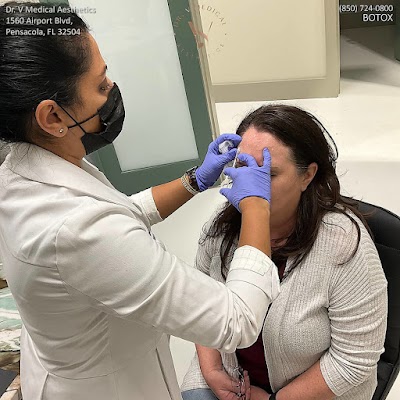
Brow lift with threads works best laterally. I use fewer, lighter barbed threads here and rely on brow fat pad support rather than skin traction alone. Care around the temple avoids injuring the frontal branch of the facial nerve.
Neck work is a lesson in restraint. PDO threads for neck tightening focus on cross hatching smooth threads to thicken the dermis. When I add light barbed threads, vectors run from the upper neck to the mastoid region to reduce banding and improve the cervicomental angle. If platysmal bands dominate, neuromodulators help, as threads alone cannot relax muscle.
Under eye and smile lines fall into the skin quality domain. Smooth threads seeded like rainfall can improve collagen and reduce crepe. Paired with low dose skin boosters, this often beats heavy filler under the eye, which risks puffiness.
What recovery really feels like
Most people return to daily tasks the next day, which is why PDO threads non surgical treatment fits busy schedules. That does not mean nothing is felt. Expect tenderness along vectors for 3 to 7 days, worse when yawning or chewing something tough. Tiny entry points close in 24 to 48 hours. Makeup usually resumes after 24 hours if the skin looks intact. Sleeping on your back and avoiding saunas or hot yoga for a week helps threads set. A mild ache in cold air is common for a month as nerves resettle.
One patient, a teacher, returned to class two days after a PDO thread facial treatment for the lower face and neck. She wore her hair down to hide small bandage dots and used a scarf for warmth. By day four, bruising faded under concealer. At two weeks, she forgot about the threads until a wide yawn reminded her. That arc is typical for a smooth course. Downsides like a small pucker do occur, and timely follow up eases anxiety. A clinic that schedules a check at one to two weeks and again around two months protects the experience.
Choosing the right provider and avoiding red flags
A PDO thread cosmetic procedure depends more on skill than on any specific brand. Ask how many thread cases your provider performs each month. Look for photographed outcomes beyond influencer angles. Ask to see PDO threads for facial lifting on patients with skin like yours: thicker or thinner, olive or fair, younger or more matured. During a PDO thread consultation, a good clinician will map vectors on your face, discuss planes of insertion, and explain what a safe, realistic result looks like.
Red flags include aggressive promises of a thread facelift that rivals surgery, a rush to place high numbers of threads without explaining why, or bundling every add on without a plan. The best outcomes grow from a tailored map, not a one size approach.
Common questions I hear, answered briefly
- How soon do I see PDO threads results? You see an immediate lift from tissue engagement, tempered by swelling that hides some contours. The sweet spot is 3 to 12 weeks, when swelling subsides and collagen support grows. Can I combine with filler on the same day? I prefer either threads first, then filler 2 to 4 weeks later, or filler first to rebuild support, then threads a few weeks on. Same day is possible in select zones, but staging lowers risk of thread displacement. Will it feel lumpy? You may feel small ridges or a cordlike line under the skin for a few weeks. It softens. Visible ripples that persist beyond two weeks deserve a look. How long is the PDO threads recovery time? Social downtime is often 2 to 3 days. Tenderness and caution with exaggerated expressions last about a week. Do threads work for a double chin? PDO threads for double chin issues help contour if laxity is the main problem. If excess fat dominates, combine with fat reduction first, then consider threads. " width="560" height="315" style="border: none;" allowfullscreen="" >
Trade offs and edge cases that shape outcomes
If you are very lean with thin, sun damaged skin, barbed threads can show. In those patients, I dial down the lift and dial up smooth thread rejuvenation combined with light energy treatments. If you are sixty plus with heavy tissue and deep creases, the PDO threads cosmetic lift will bring a nicer jawline and less pouching, but the extra skin remains. When that extra skin bothers you daily, a surgical facelift is more honest and often more cost effective long term.
Another edge case is the patient on retinoids with fragile capillaries who bruises easily. For them, pre treatment with arnica, avoiding blood thinners when medically safe, and planning the calendar around events prevents panic. Those with strong masseters who grind at night can feel more pull and tenderness along the jawline. A small dose of neuromodulator in the masseter a couple weeks in advance can make the PDO thread therapy more comfortable.
Setting expectations with real numbers
In my practice, satisfaction rates are highest when we agree on a goal like lift the jowl by a few millimeters, define the jaw curve, and firm neck skin by a visible but subtle amount. If we try to move a heavy cheek by a centimeter, patient and provider both lose. Typical lift measured on a lateral photo after PDO threads for facial contouring sits in the 3 to 5 millimeter range for mild jowling, which looks like a notable but natural change. Skin firmness changes are more subjective, but patients often report makeup sits better and gloss does not pool at marionette lines the way it used to.
Longevity numbers vary. For most, a PDO threads facial lift treatment shows best at 3 months and remains pleasing through 9 to 12 months, with softer benefits persisting longer because of collagen. Maintenance at 12 to 18 months keeps the contour honest. Those who add smooth thread skin renewal treatment yearly often comment on fewer etched lines and more spring in the skin than before they started.
The bigger picture: confidence and restraint
PDO threads are a tool for facial definition and support that fill a gap between skincare and surgery. They create room for confidence when the mirror no longer matches how you feel. The key is restraint and thoughtful pairing with other modalities. A PDO thread anti aging treatment should not chase a trend or an extreme silhouette. It should aim to restore lines the face used to have, not to invent new ones.
If you are considering a PDO thread appointment, gather your questions, review authentic before and afters, and book a consultation that leaves time for mapping and education. The best PDO thread therapy for face does not start in a procedure room. It starts with an honest plan that fits your anatomy, your tolerance for downtime, and your long term goals.
When threads are chosen well and placed with care, the benefits extend far beyond the initial lift. Skin thickens. Edges refine. Expression remains yours. And a year later, when even you have forgotten the day of the procedure, the mirror still rewards the decision.